Karma Bodrum opened its doors in early June 2025. I worked alongside the team as a consultant through the opening, and ever since, this historic stone olive oil mill across from the marina has been one of the tables where I feel most at home in Bodrum. On the evening of 4 November we gathered within the same walls again for the first event of Karma’s autumn–winter 2026 season.
Making room for the kitchen
Since the day Karma opened, the kitchen team has had dishes they wanted to add to the menu. Summer moves too fast to test a new plate and really listen to how guests respond. Once the season slowed down, their turn came.
We set up this evening partly for that: let the team put their ideas on the plate, and let people in Bodrum who know a good table taste them and say what they think. A kitchen gets no more valuable test. Guests tell you as much by whether they finish the plate as by what they talk about over the second glass.
The menu: thirteen plates, from meze to dessert
The menu followed the familiar rhythm of an Aegean table. It opened with cold dishes, moved through warm small plates, deepened with fish, settled with rice and closed with two desserts:
- İstanbul salad
- Datça Güzeli
- Hummus with kavurma
- Saffron-marinated anchovies
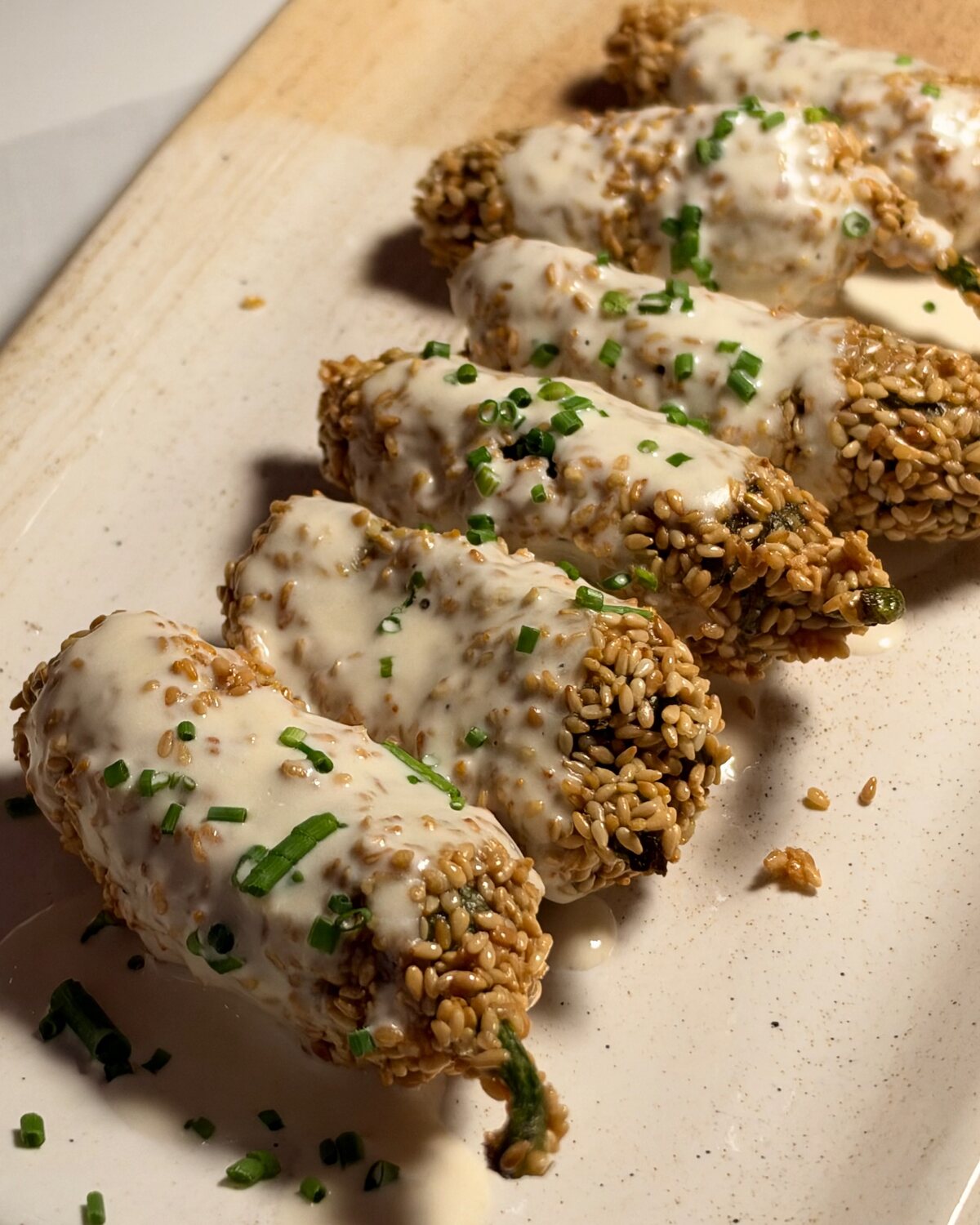
- Fried village peppers with silky lor cheese, Manavgat sesame and piyaz sauce
- Mücver fritters with radish greens
- Sardines wrapped in vine leaves with spiced rice
- Sole with yoghurt and anise
- Mussel pilaf
- Octopus in terbiye sauce
- Monkfish lokma
- Ice cream with baklava and pistachio
- Caramel rice pudding
Read the list closely and you can see what the night was really about. Anise did not stay in the glass; together with yoghurt, it found its way onto the sole. Two Aegean classics, sardines and stuffed vine leaves, met on a single plate. Lokma left dessert behind and turned savoury with monkfish, while the ice cream gathered baklava and pistachio into one spoonful.
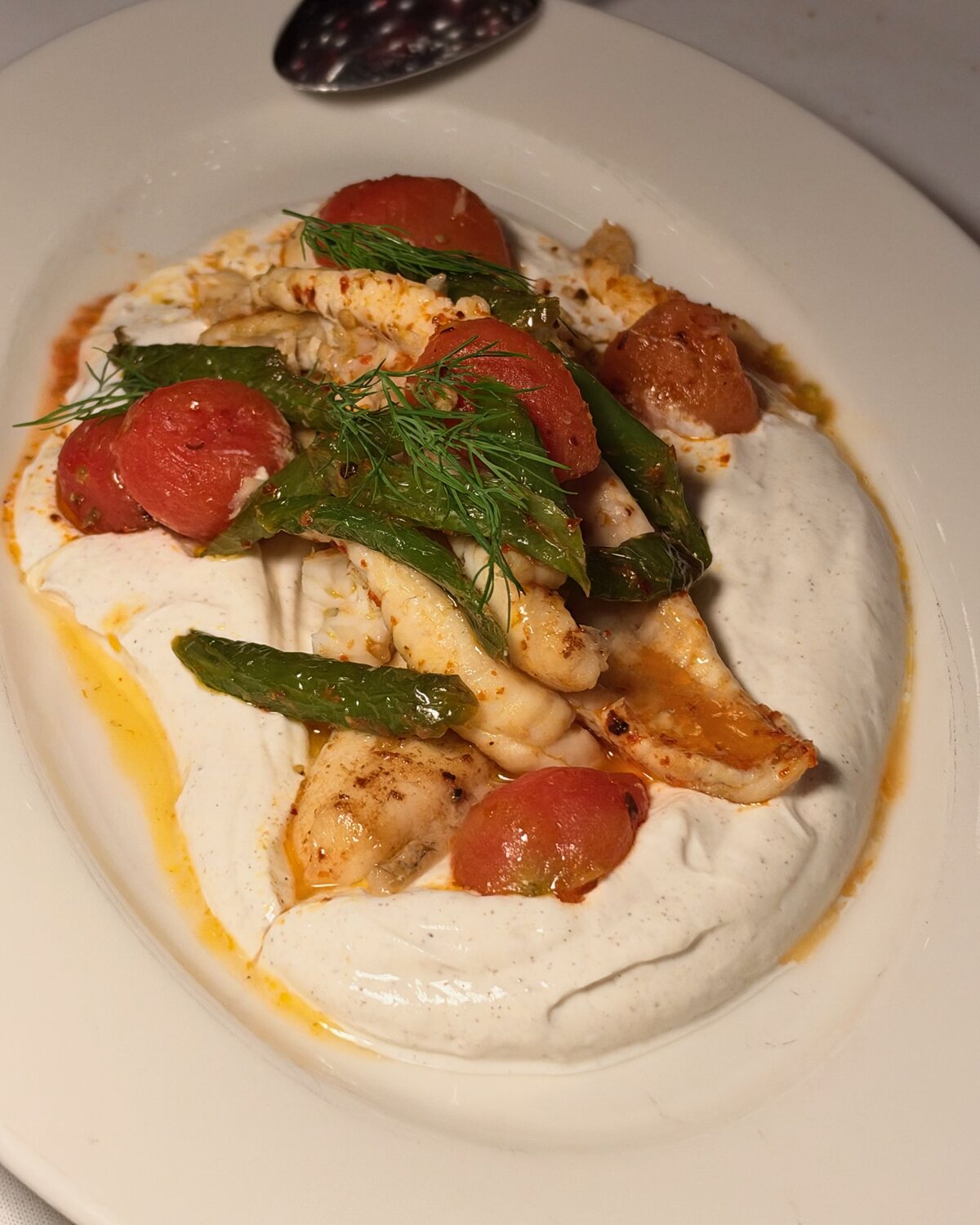
Photos: Sinan Hamamsarılar
The names map out the table from the start: meyhane memory on one side, with the İstanbul salad and the octopus in terbiye, and the Mediterranean and the Aegean on the other, with Datça, Manavgat sesame and radish greens.
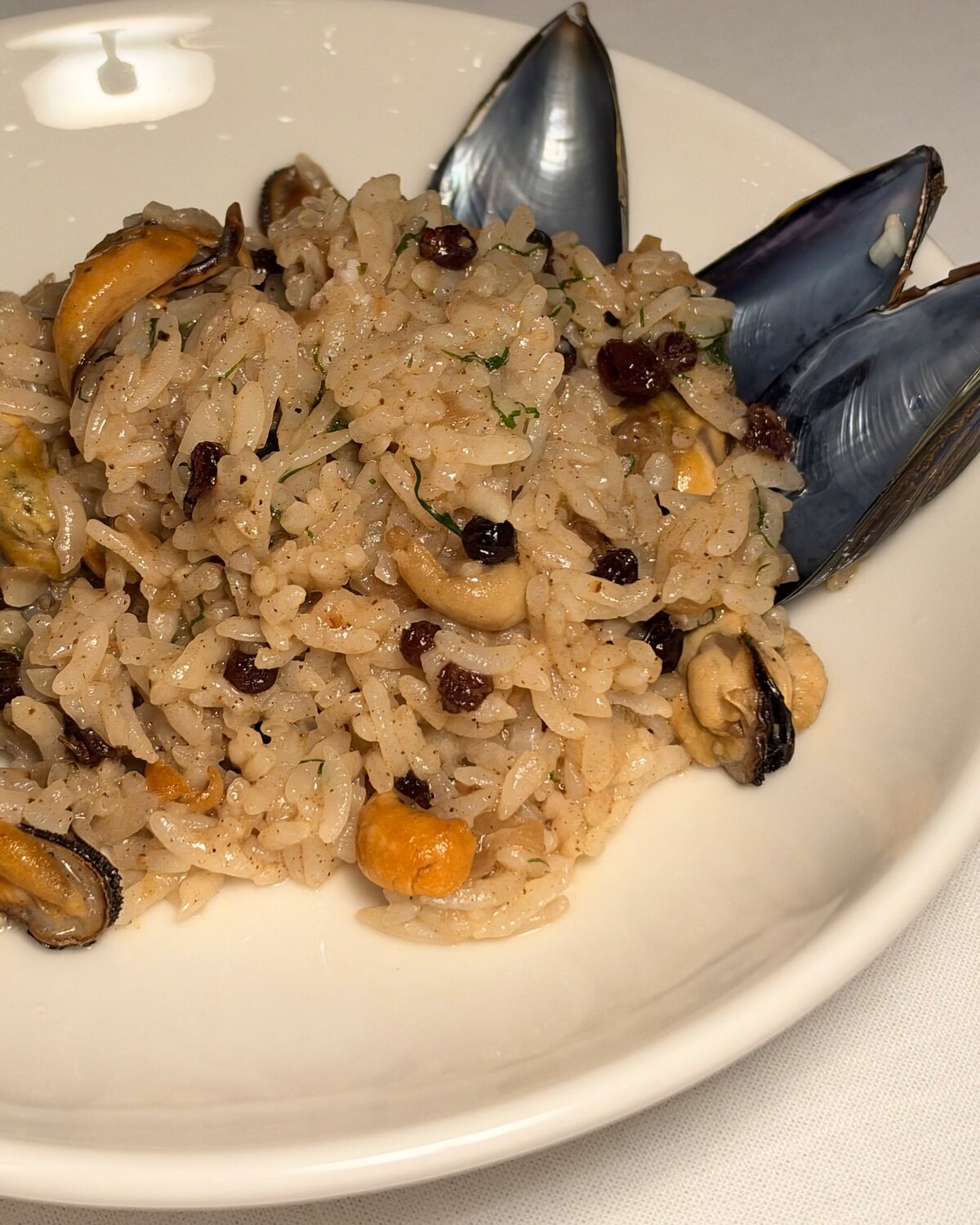
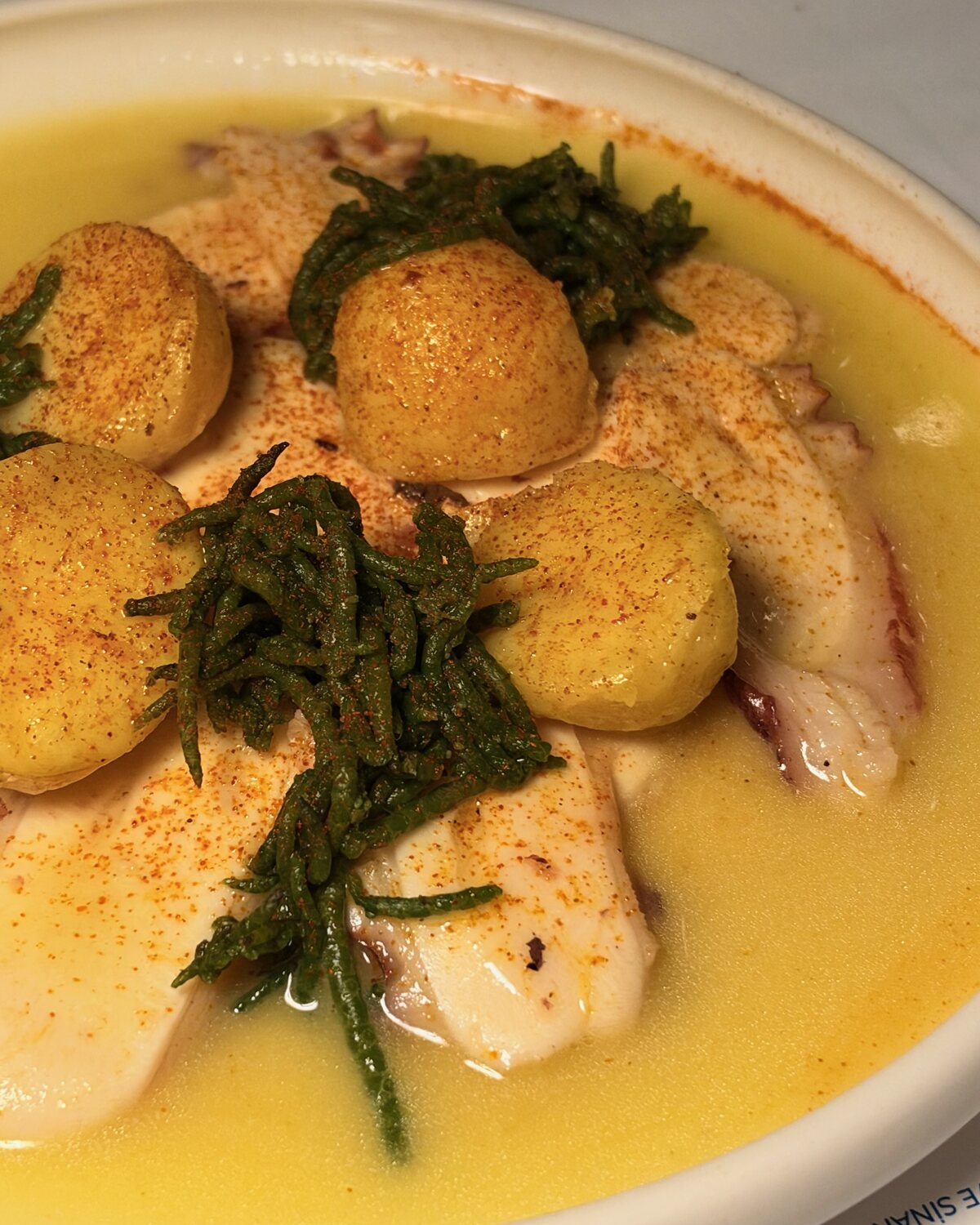
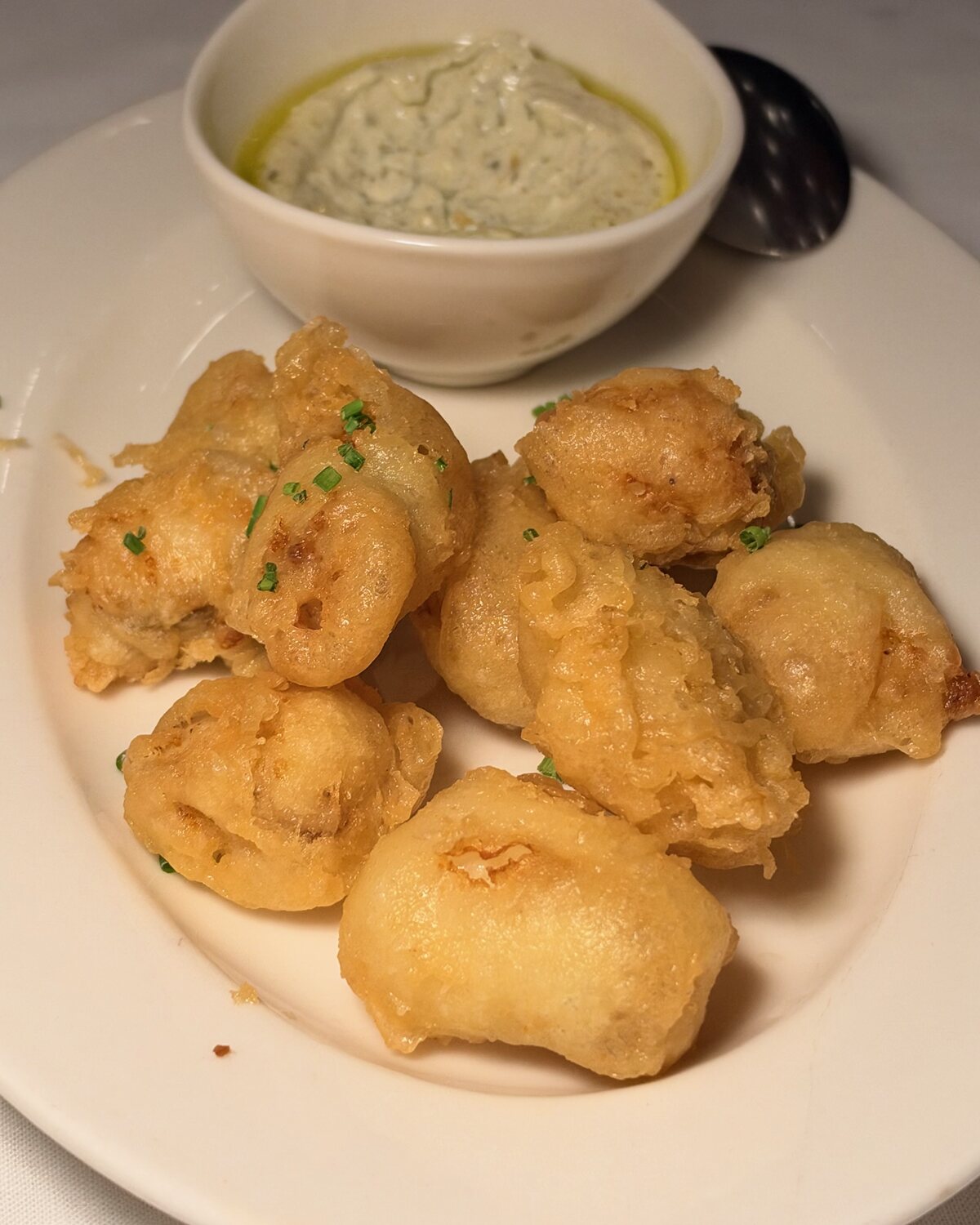
Photos: Sinan Hamamsarılar
Talking anise
On the conversation side of the evening was my dear friend Ayça Budak. Ayça runs IWSA (International Wine & Spirits Academy) and is a WSET-certified expert and educator. A month ago she was our guest on episode 51 of Yemekte Bile Yemek Konuşuyoruz, where we talked about Bir Masa Etrafında, the book that gathers IWSA’s eighteen years in gastronomy, and its themed tables.
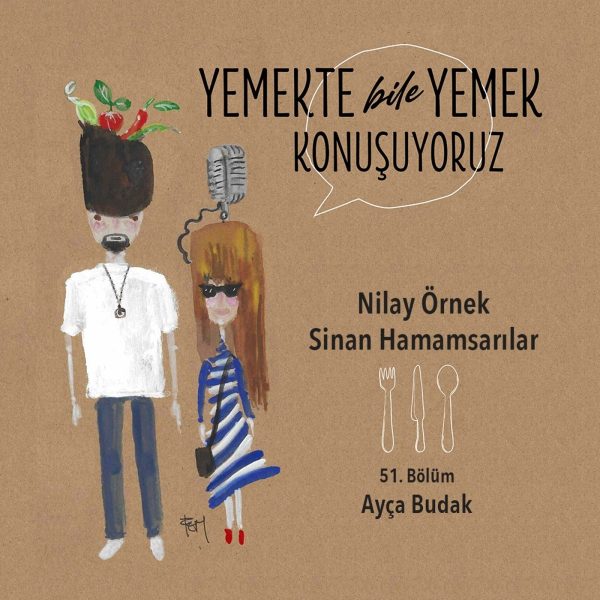
Cover: Yemekte Bile Yemek Konuşuyoruz
This time we took the conversation from the studio to the table. Everyone sat at a single long table, and we talked about anise and the fine balance between meze and glass. Looking at the photos, the whole night comes down to one detail: Ayça and I are laughing in almost every frame. That is what I love most about an Aegean table: food settles naturally into a conversation that is in no hurry.
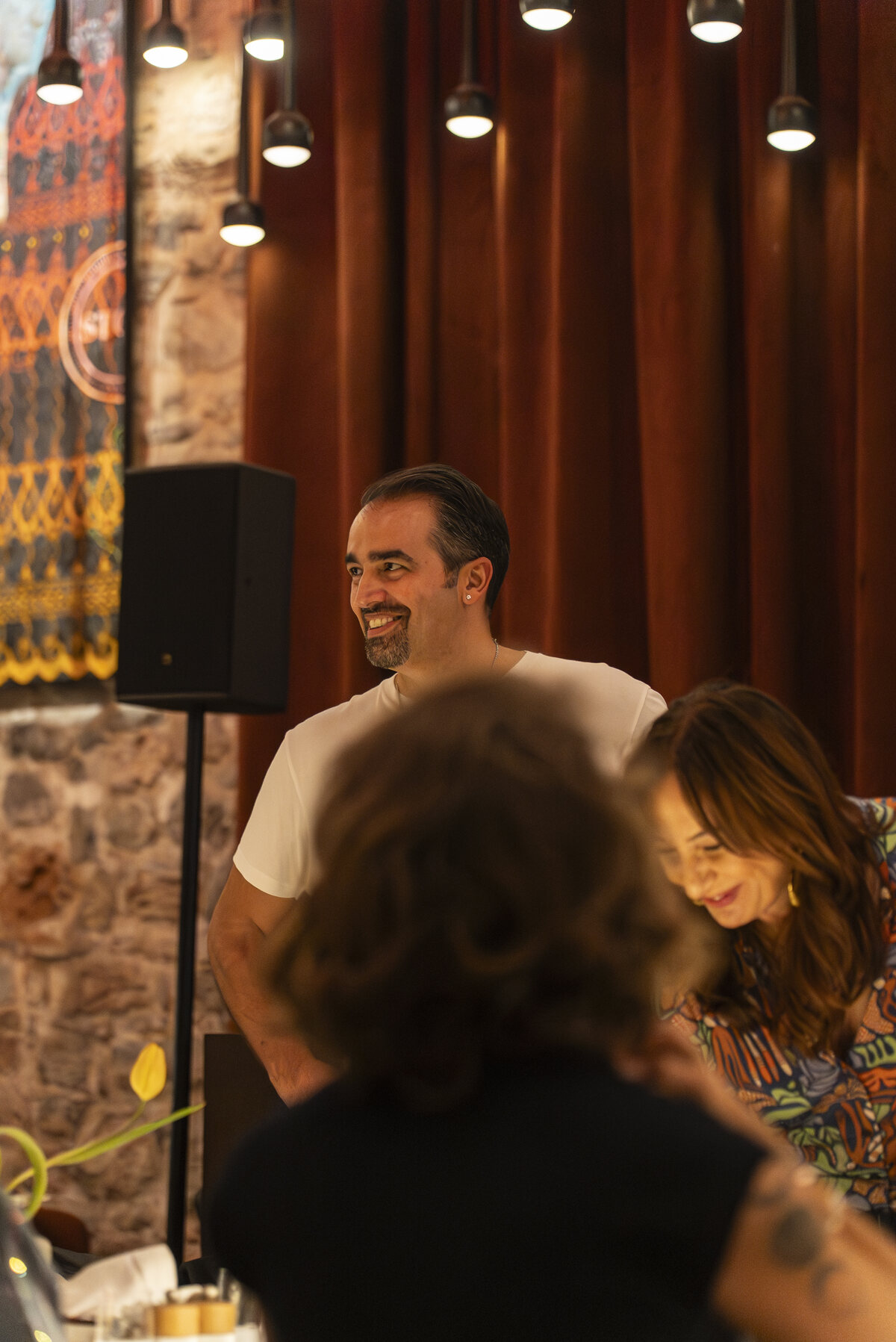
That is where the night’s name comes from. White is the anise glass that clouds when it meets water; blue is the Bodrum sea and Karma’s signature colour. Their conversation never ends in a single evening, and thankfully so.
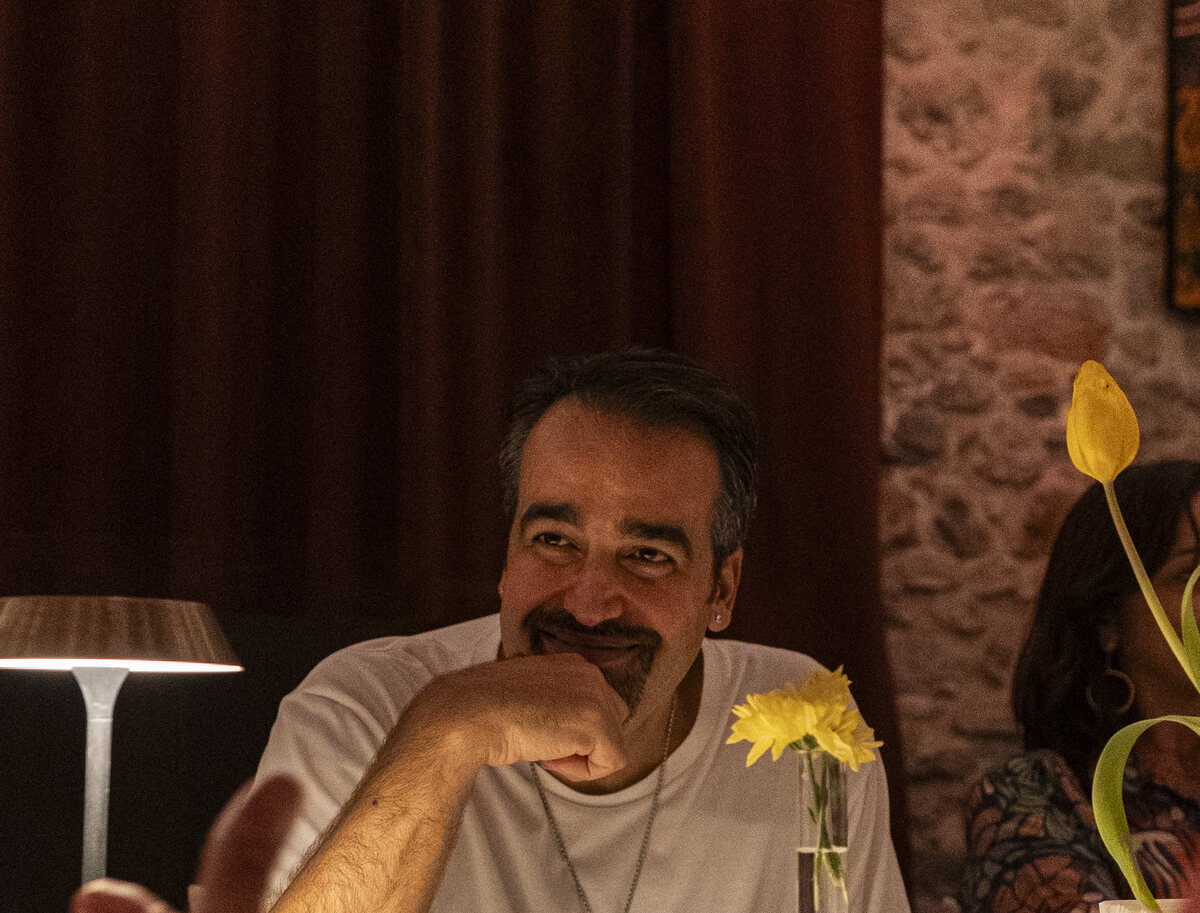
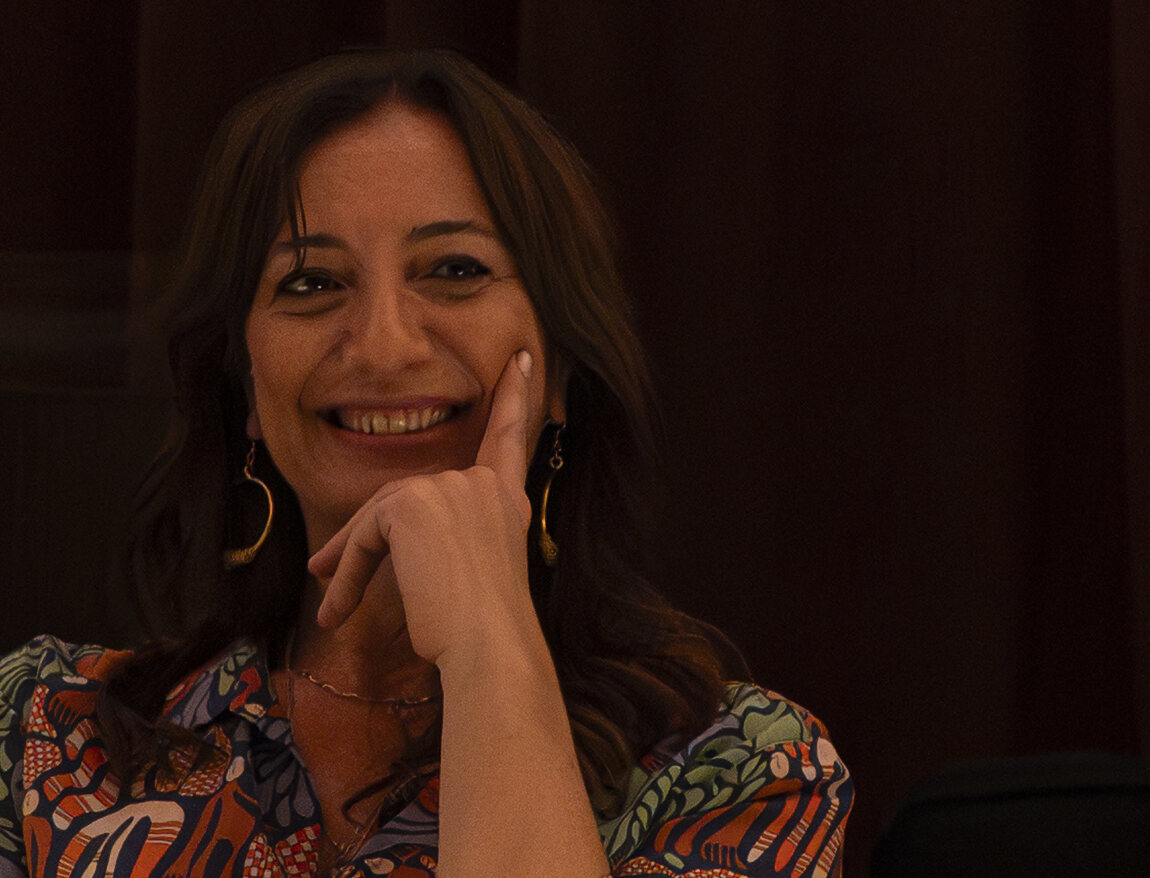
Photos: Cenk Karacalar and Volkan Çalışır (CodeZero.Media)
A night in the olive oil mill
Karma’s building is an old olive oil mill. Stone walls, hundreds of small lights hanging from the high ceiling and dark curtains turn the long table into a stage of its own. Bodrum goes quiet when the season ends, but when a table is laid here, the building comes back to life.
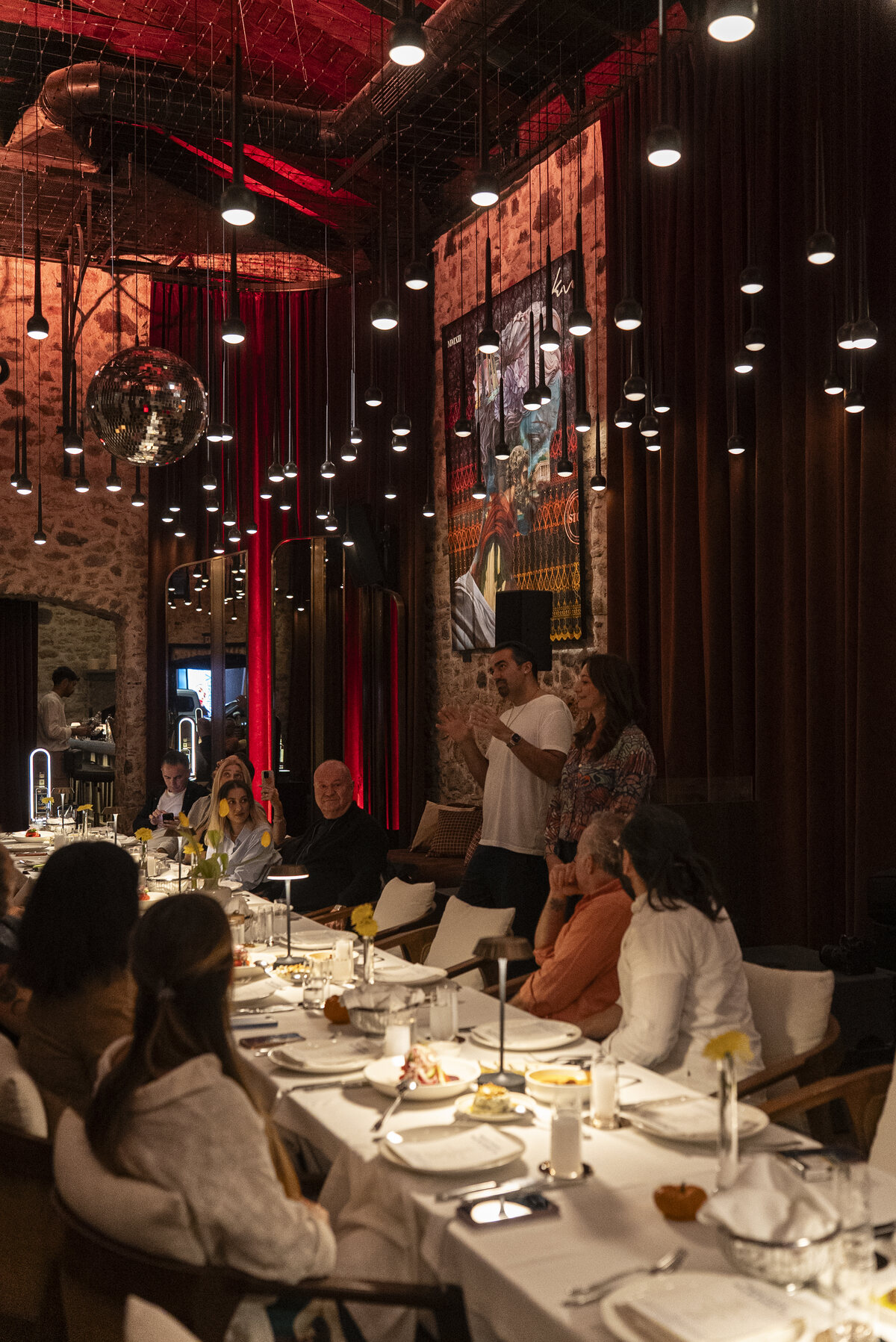
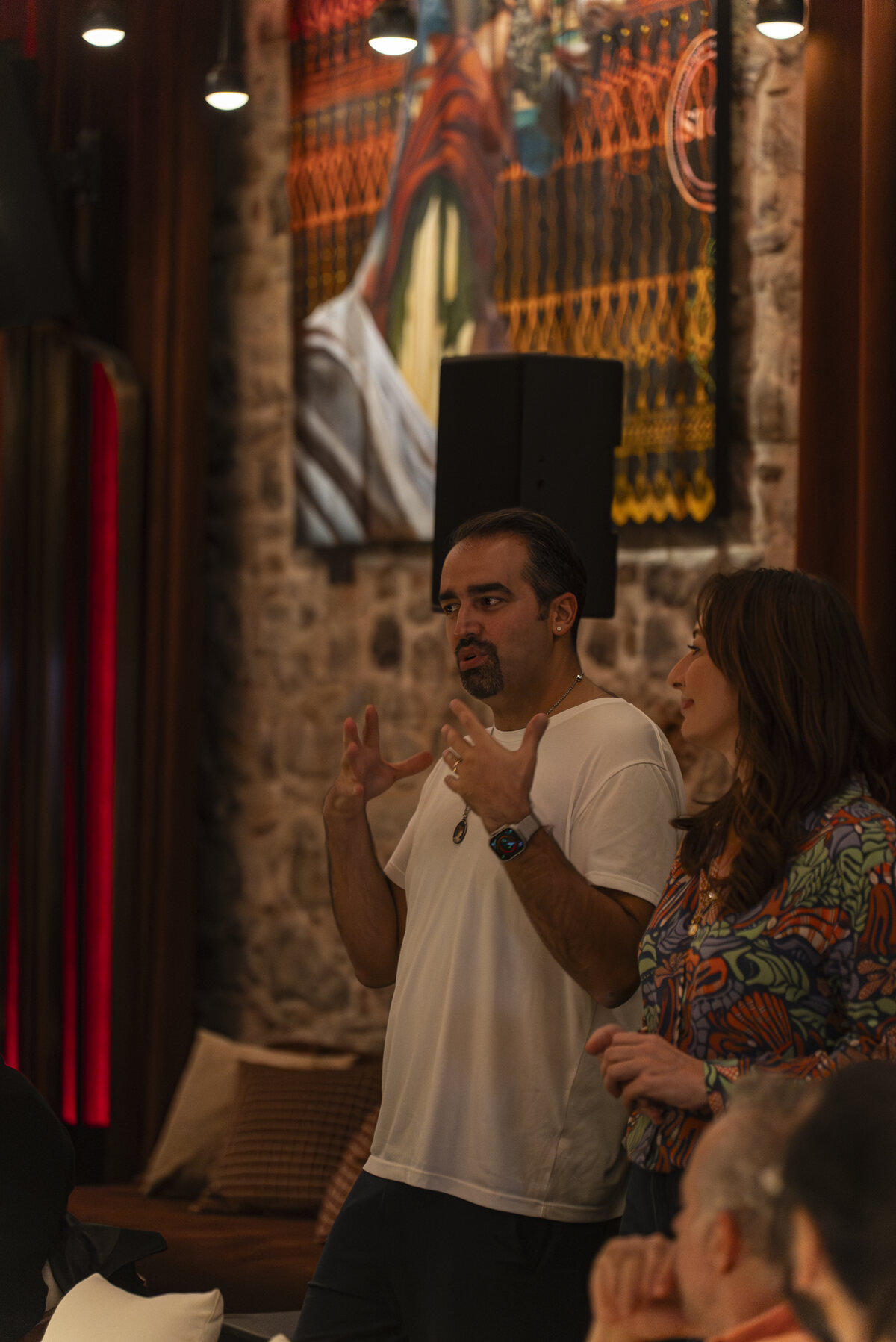
Photos: Cenk Karacalar and Volkan Çalışır (CodeZero.Media)
Around the table were people who love good food and know Bodrum well. The kitchen team’s plates made their way to the table one by one, through the conversation.
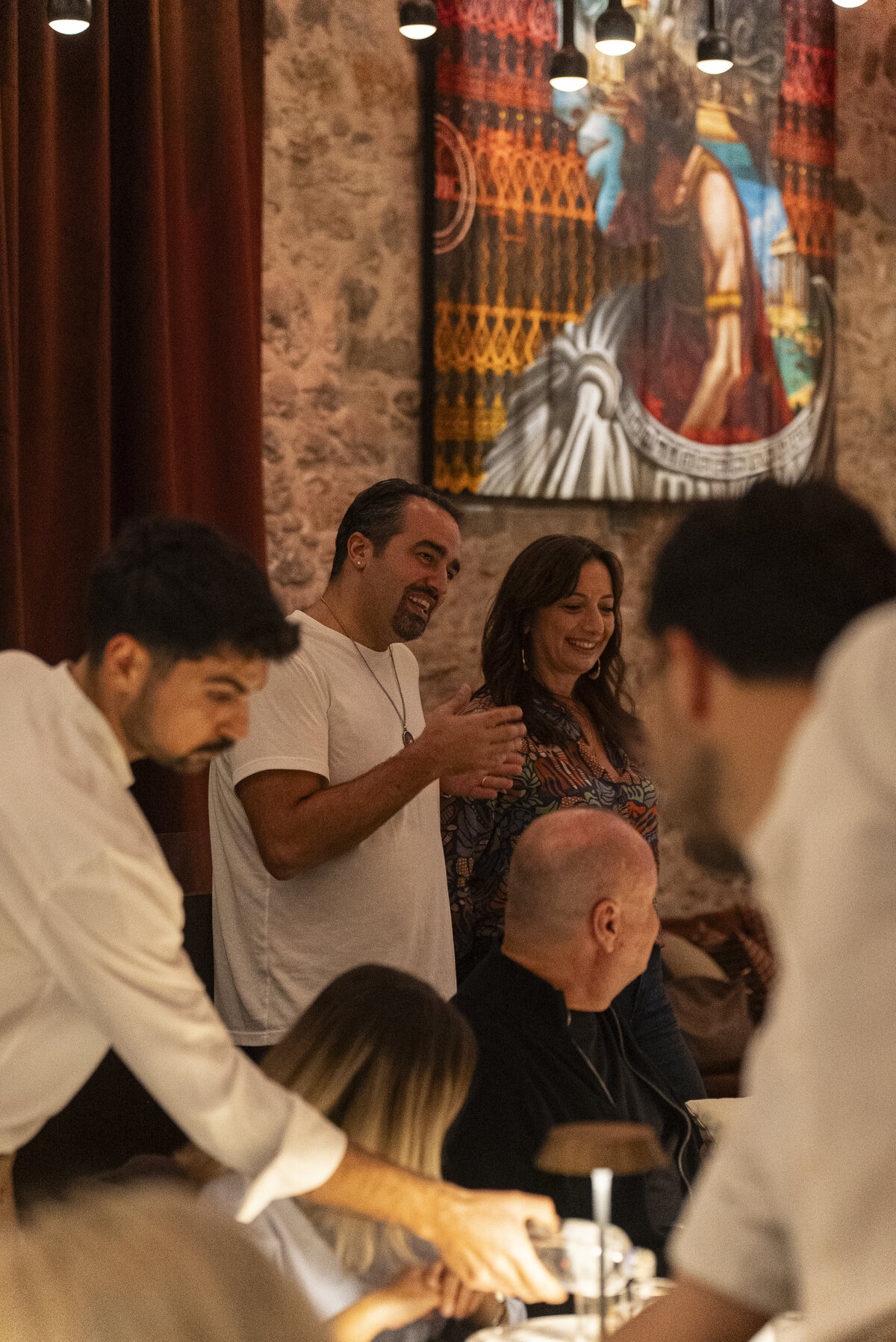
It is now up to the kitchen to decide which dishes make the permanent menu; what came back from the table is in their hands. What stays with me is that the season opened with such a lovely night. Many thanks to the Karma team and to Ayça.
Karma Bodrum is one of the projects Anaterranean advised on for its opening. I was not paid for this evening. Cover and event photos: Cenk Karacalar and Volkan Çalışır of CodeZero.Media, Karma’s social media agency. Food photos: Sinan Hamamsarılar. My editorial principles →