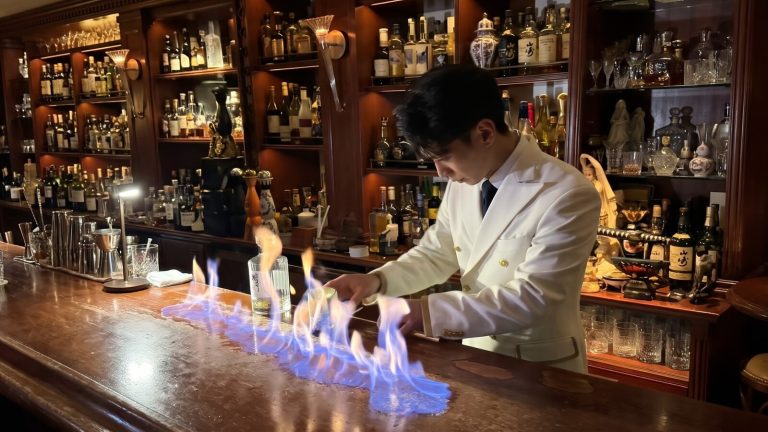
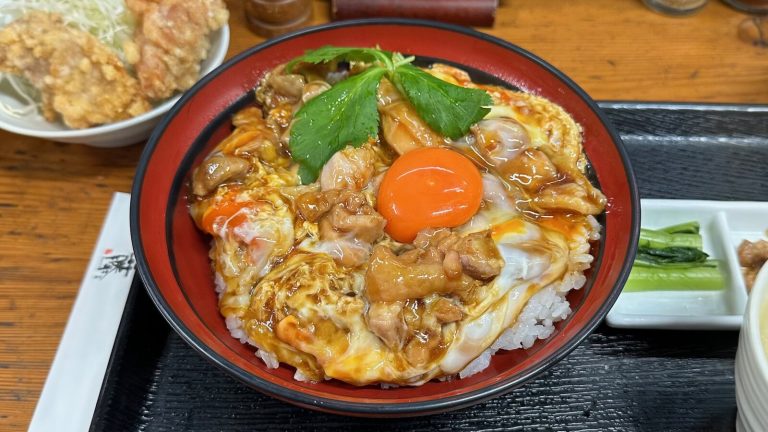
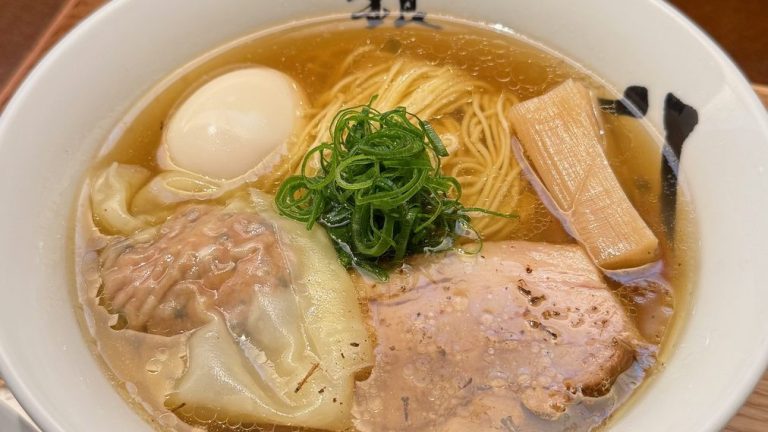
An izakaya is where Japan goes after work: drinks first, then a steady stream of small plates. The name joins i, “to stay”, and sakaya, “sake shop”: a liquor store where you sit down and drink.
The closest Western equivalent is somewhere between a pub and a tapas bar. But the rhythm is its own: the drinks arrive first, the food follows a little at a time.
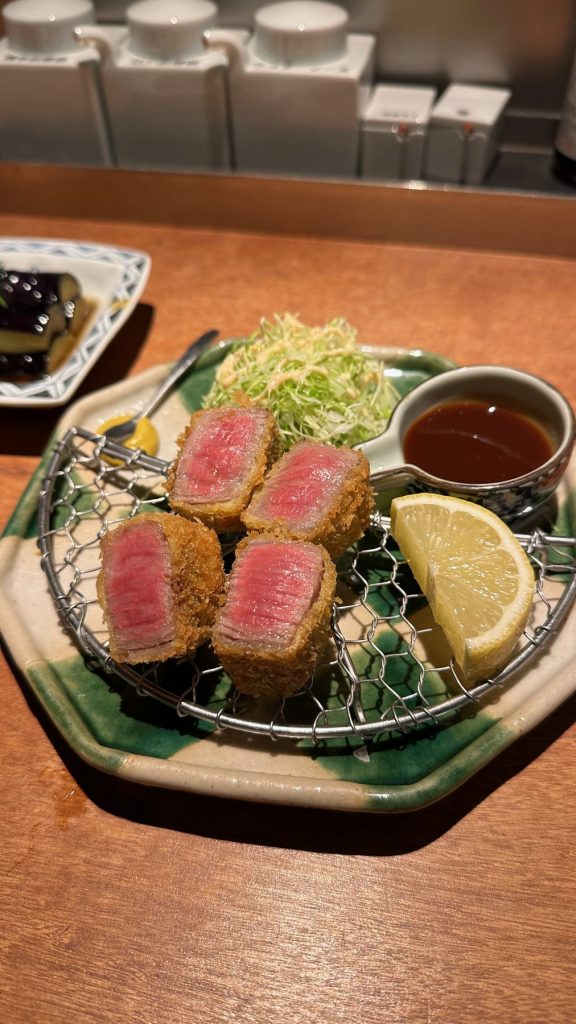
At the door
- You’ll be asked how many you are (nanmei-sama desu ka?). Holding up fingers is enough.
- A damp towel (oshibori) arrives. It’s for your hands, not your face.
- The first order is a drink. The classic opener is toriaezu biiru: “a beer for now”.
Otoshi: the dish you didn’t order
- Along with the drinks comes a small plate nobody ordered. In Tokyo it’s called otoshi; in Kyoto and Osaka, tsukidashi.
- It isn’t free. It’s charged per person, usually a few hundred yen at an ordinary izakaya.
- Think of it as a cover charge, the price of a seat in a country without tipping. If unsure, ask otoshi wa ikura desu ka? (“how much is the otoshi?”).
- Bars may add a separate seating charge (sekiryō).
Ordering
- Plates are for sharing. Order a few, then more when they’re gone; don’t order everything at once.
- Big chains take orders by tablet or a QR code on the table. Smaller places often have handwritten menus in Japanese; your phone’s camera translation will do the job.
- Raising a hand and saying sumimasen is the normal way to call staff. Some tables have a buzzer.
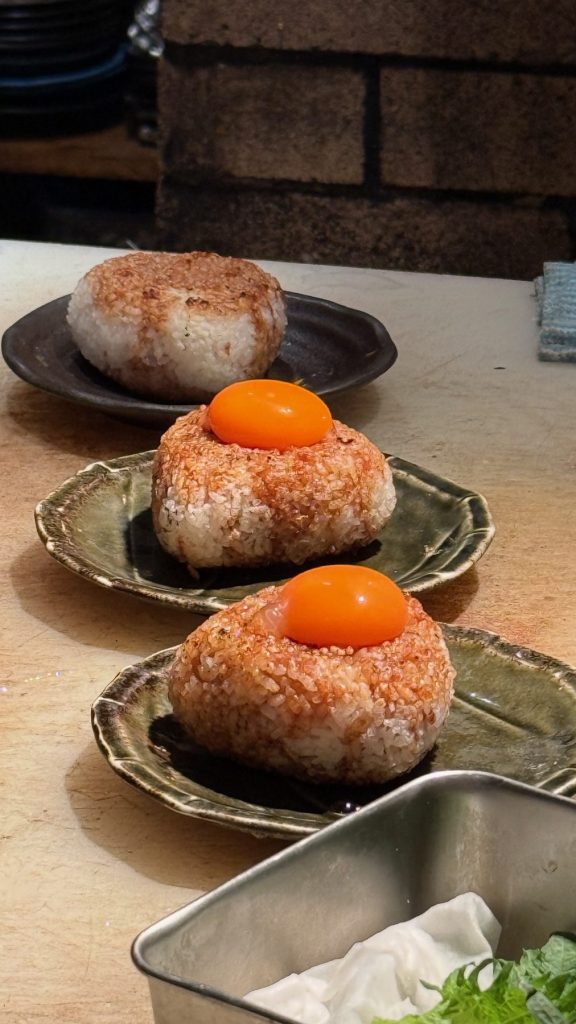
- The classics: edamame, karaage, yakitori, sashimi, tamagoyaki, grilled fish. Finish with onigiri or ochazuke.
- Nomihodai (all-you-can-drink) and tabehodai (all-you-can-eat) are timed packages; they make sense for big groups.
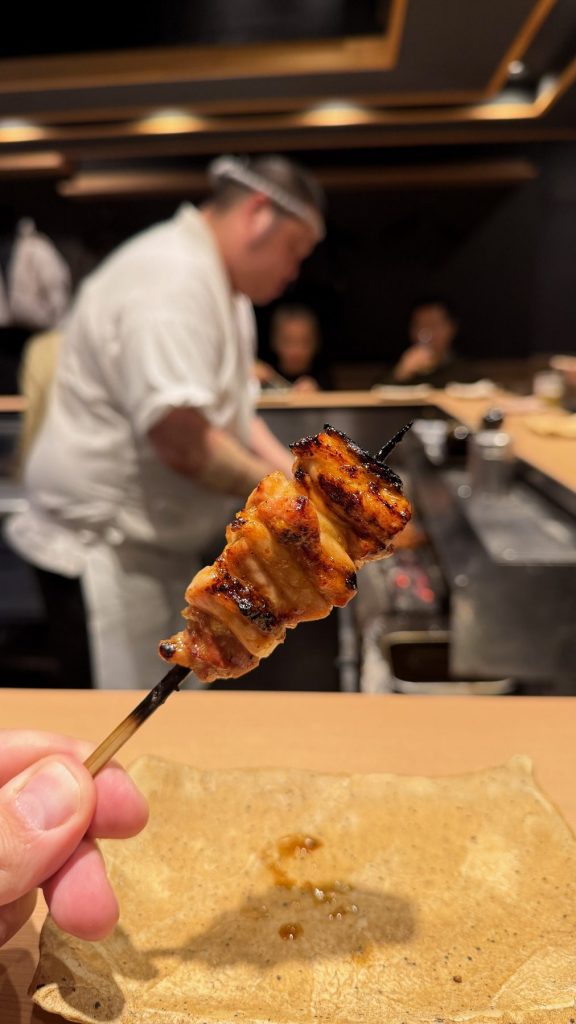
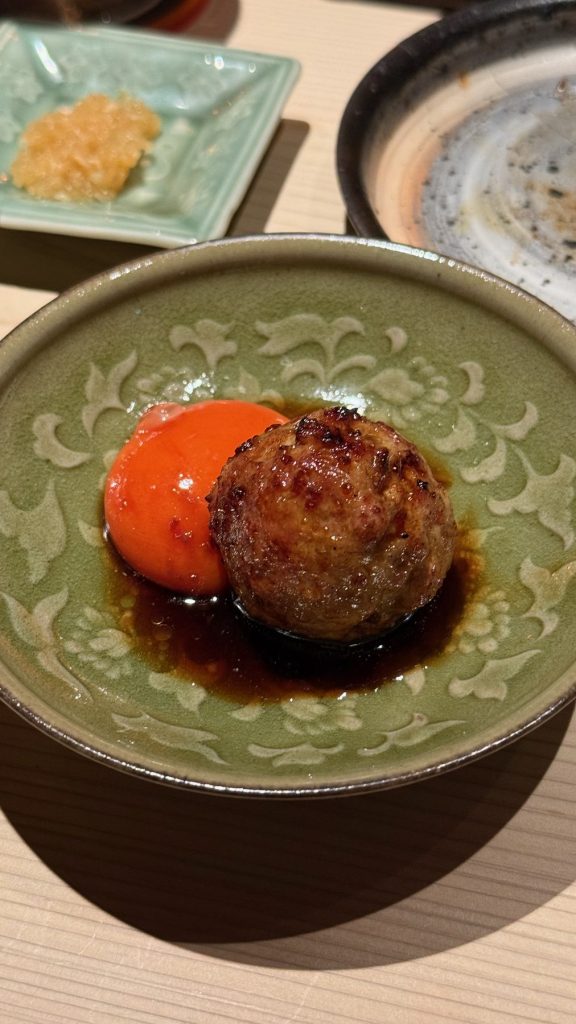
Drinks
- Sake can be ordered hot (atsukan) or cold.
- Highballs (whisky and soda) and chūhai (shochu-based, often fruit-flavoured) are among the most common orders.
- In a group, you pour for others rather than yourself. Glasses go up with kanpai.
The bill
- You pay at the register. No tipping.
- Some small places are cash only.
- Most restaurants in Japan no longer allow smoking indoors, but some small places still do and say so at the entrance. If smoke bothers you, check before you sit.
Yokocho
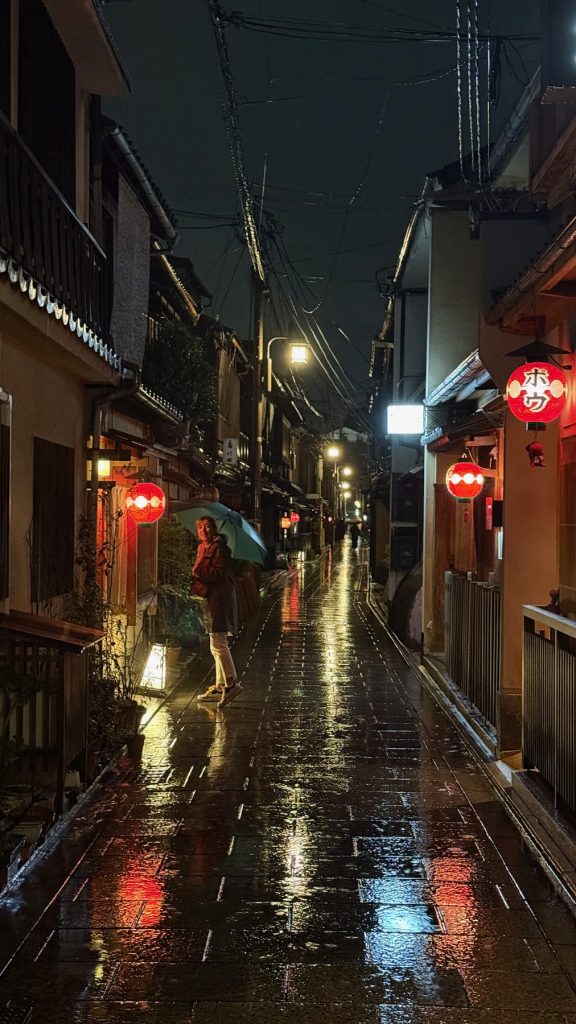
A yokocho is a narrow alley lined with tiny izakaya and bars. Tokyo’s two best known are in Shinjuku: Golden Gai and Shinjuku Horumon Yokocho. Most places seat a handful of people; some charge for the seat, some only let in people they know. It’s usually posted at the door. If it isn’t, ask.
Izakaya on my list
In Tokyo: Yakiton Yamane, Shosuke and, for robatayaki, Robatasho in Shinjuku; old-school Abe-chan in Azabu-Juban; Gonpachi and Tanakada in Nishi-Azabu; Himorogi in Ginza; and Zauo, where you catch your own fish.
In Kyoto: Ushinohone, Kirinya, Futaba, Kimiya and Rutubo in Kawaramachi; Sake Hall Masuya in Karasuma for sake.
In Osaka: Kurodaruma, a standing bar in Honmachi, and Izakaya Toyo in Kyobashi.
Every address is mapped, neighbourhood by neighbourhood, in my Tokyo, Kyoto and Osaka guides.
For listeners
Nilay and I talked izakaya culture in episode 17 of Yemekte Bile Yemek Konuşuyoruz, recorded in Tokyo (in Turkish).